Chris Stead, GamePro Australia
14/09/2004 11:52:50
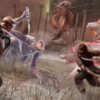
For some screenshots of Thief 3, click the following links: 1 | 2 | 3 | 4 | 5 | 6 | 7 | 8
In the real world, thieves are one of society's true bastards. They knock off your VCR while you're taking a kip, bugger off with your wallet in the middle of a crowded street and steal your chick when you pass out at the pokies. But in the virtual world, they're a wicked gameplay mechanic. Tip-toeing through the shadows, eaves-dropping on important conversations, picking locks, rendering the oblivious unconscious - its bloody sweet! Well our hero here can do all that and then some - gorgeous presentation, a ripe plot, smart gameplay and exceptional level design ensuring that this thief remains king of the FPS Stealth sub-genre.
FPS Stealth? Unusual yes, but Thief's unique legacy stems as much from its point-of-view as it does from its medieval setting. In place of Shotguns and Uzi 9mms you have daggers and bow and arrows while military compounds make way for haunting castles. The narrative is also far more relaxed than you usual genre-fare. Your adventure begins with a routine break and enter at the local Inn to acquire a leather pouch seen escorting one Lord Julian. During the robbery you catch a conversation regarding an entrance into a nearby castle where a rather large opal has taken residence. Naturally your curiosity is piqued, but as you stumble across more clues and conversations you set of a series of events that ultimately awakes an ancient evil. Is Garret in well over his head?
| Perspective |
| The most notable addition to TDS is a 3rd-person mode. Unfortunately, it isn't as effective as the original 1st-person and only useful to gaze upon Garrett's slick animations. |
It's a thoroughly engaging narrative that really creeps up on you. At first you are happily grabbing silver plates from vacated dinner tables, but all the while the plot is weaving its own deception, subconsciously luring you towards the bigger fish. It utilizes barely heard hearsay and random discoveries to progress, interwoven with stunning cut-scenes that hold the missions together logically and intriguingly. Yet it never feels invasive. When, at the outset of the third mission, you begin in your flat with nothing but a bag full of spoils and a front door leading to the city, you feel as alive and free as your character.
This freedom is a direct beneficiary of the level design. Effortlessly open-ended, it suggests one method of progression, while keeping plenty more cloaked within its robe, available to gamers willing to explore. In the second mission for example, you are required to break into a castle. You can put out a torch in the courtyard to signal the cook to open a secret entrance, lure the guards from the main door and sneak in, find a low window to the side of the entrance or even take the guards out completely. Once inside, careful exploration will uncover clues to various riches that are completely inconsequential to the plot and if a thoughtless guard meanders into your path, there are enumerable ways of getting past.
This design is close to flawless (it would be nice if the shops were closer together) and with repeat gaming, you will always find new and inventive ways to achieve your objectives. But more importantly, it makes you feel like a thief. When you enter a building you are travelling blind. You have a vague idea of where to head thanks to a shitty medieval map, but gameplay is more reliant on you feeling your way around, learning the layout, guard positioning and clearing an escape route.
| Let's Get Physical, Physical |
| One of the keynote attributes of the PC's next-generation of games is in the physics. Far Cry, S.T.A.L.K.E.R and Half-Life 2 are key examples of this revolution and while Thief comes close, its falls short of entering this pseudo-genre. Obstacles will tumble realistically when knocked over, but they are mostly set-ups rather than an inconsequential part of the environment. Bodies too, will fold and flap on their way to the ground, but they bend in ways that would defy a Russian gymnast. At least you can see Garrett's feet in 1st-person mode - nerdy yes, but 'choice' all the same. |
That, of course, means thwacking some dweeb over the melon and stashing his inanimate mass within the veils of the nearest shadow. Somewhat of a genre given, it works here in much the same method seen in Hitman and Splinter Cell, with controls equal in dexterity to the latter. Indeed, you have quite a useful bag of items (health, flash bombs) and weapons (blackjack, dagger), but most of your activity will involve your bow and arrow. There are 6 types of arrow, including: broadhead, noisemaker, gas, fire, moss and water. The latter can be used to extinguish lights and thus, in conjunction with your light-gem, help determine your visibility.
But thanks to a sharp AI, moving undetected is no mean feat. They will react to stirring shadows, knocked over objects or footsteps in believable and increasingly varied ways. They may take a look and dismiss it as nothing, crack a joke, call nervously into the shadows or storm out looking for action. A wounded or unarmed AI will not face you either, instead running off to grab reinforcements - before you know it you will be stormed and close combat is ill-advised. That's because the controls are not well suited to this gameplay - not surprising given the nature of the Garrett. Also, the AI's dialogue is a tad repetitive and way to harsh on the average medieval goon's intelligence.
| System Check |
| The Xbox version is not a port, it was developed alongside the PC title and while the graphics and sound aren't quite as solid, it is still a remarkable gaming experience. |
These issues do affect the atmosphere slightly, but for the most part it's electric. The score is excellent, keeping you as tense as your character and ensuring that you won't even blink in fear that the guard - but a foot away - will hear it. There are some volume issues with the SFX, but in light of their diversity and quality, this can be forgiven. As for the graphics they are gorgeous. The medieval world is brought to life from every flickering torch to every cobbled stone. There are some slight lighting bugs, but PC owners should see this rectified in an early patch.
There is, however, no multiplayer component or action-based missions - its pure stealth, from break-in to theft. Plus, its medieval setting dictates no radars, gadgets or high-tech weapons. Gameplay requires you to wait patiently in the shadows, using elaborate lock-picking tools, spying the telltale glint of loot and running from fights rather than starting them. If you can sink into this character and this type of gameplay then TDS is extraordinarily rewarding and easily the equal of Splinter Cell: Pandora Tomorrow.
| Verdict |
| Exceptional level design and whet with atmosphere this will elate series faithful and deserves to attract all fans of stealth-based gaming. |
| Pros: Intelligent level design, awesome presentation, unique gaming. |
| Cons: Slightly buggy, vocal SFX a little overdone, encourages anti-social behaviour. |
Score = 9.5/10

[ Printer Friendly Version ]
[ Other stories about Interwoven, Gameplay ]
| Graphics: 5.0 |
Sound: 5.0 |
Control: 4.5 |
Fun Factor: |
 |
Scoring scale: 1-5
Publisher: Eidos /
Developer: Ion Storm /
Retail Price:
$89.95
(PC) /, $99.95
(Xbox) /
Release date: 30/06/2004 /
Genre:
Action, Adventure /
OFLC Rating: Not Yet Classified